

Wind chimes
Metal, bamboo wood, Feng shui bells, gongs
The gentle, harmonious melody of a tuned wind chime carried by the breeze… What could be better than a wind chime
to add a touch of magic and a serene atmosphere to your garden or balcony?

What are the benefits and uses of a wind chime?
The tradition of wind chimes originated in China, where they were often hung in bamboo forests. In those days, the sound produced by the wind was heard as an omen that, according to the senfutaku divination technique, heralded good or bad news. In Japan, for over a thousand years (Heian period), first in temples, and more recently in homes, the delicate chanting of wind bells or furin in summer has warded off evil spirits and disease.
Much more than decorative chimes, wind chimes create an atmosphere and sounds conducive to relaxation and wonder. They are a must for Zen gardens and outdoor spaces where you want to benefit from positive and harmonious energy. They are widely used in Feng Shui, as their sounds help to improve the circulation of energy in the space.
Which design to choose?
There are all kinds of designs in different materials and colors:
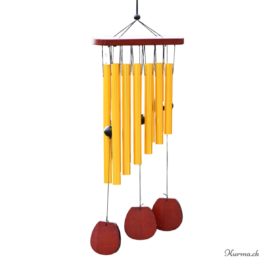
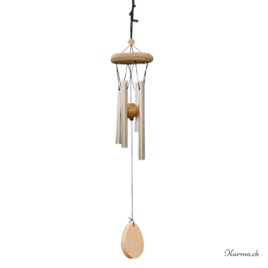
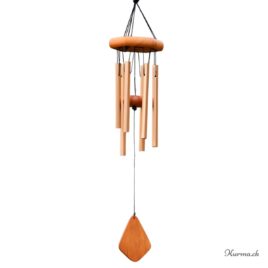
- Tube chimes consist of metal tubes, usually made of aluminum, though sometimes of wood or bamboo, in various lengths. The number of tubes determines the number of notes. The more tubes there are, the greater the chime’s ability to produce a variety of sounds. The longer the tube, the lower the pitch; conversely, shorter tubes produce higher-pitched sounds.
The part that strikes the tubes to produce sound is called the glissandero. - Bell chimes consist of one or more bells. Although Japanese bell chimes and Buddhist bell chimes are the most widespread and popular, this style of chime can be found in many different cultures.
- Gong chimes have a design that is perfectly suited to a Zen atmosphere. Here, no tubes but a metal gong on which a ball strikes to make the gong sing.
- Koshi- or Zaphir-style chimes are crafted according to the golden ratio and are perfectly tuned. They consist of a resonating tube with eight strings attached to the base. These wonderful therapeutic tools and musical instruments are accessible to everyone; they can also be used as door chimes or wind chimes, but only in sheltered locations. Be careful—there are many copies of these famous chimes. You’ll find the genuine Koshi and Zaphir chimes on the dedicated pages of this website.
Where should I place a wind chime?
To fully enjoy its benefits, wind chimes are usually placed outdoors so they can be gently swayed by the breeze. They can be hung from a tree branch, a hook above your balcony, or a garden arch.
Precautions for use
While these wind chimes are designed to be placed outdoors and withstand the elements, some of them—particularly those with wooden parts—are not meant to withstand prolonged freezing temperatures or extremely harsh weather. For greater durability, if your wind chime is located in an unprotected area, it is advisable to store it away during the winter.
Discover other items for the home and garden
Reproduction in whole or in part of this content is prohibited. More info