

Ametrine
: natural gemstones, bracelets, tumbled stones, pendants, and tumbled stones
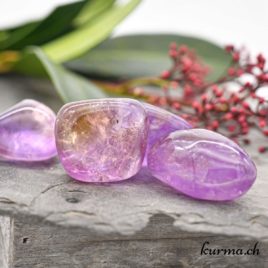
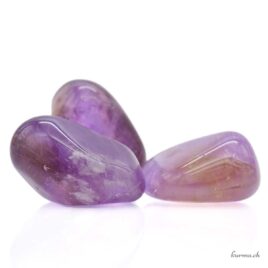
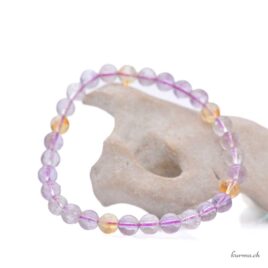
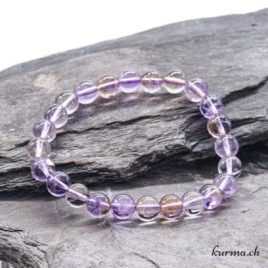
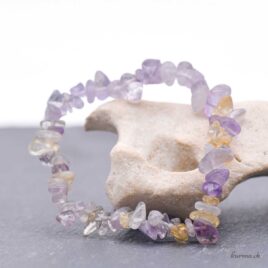
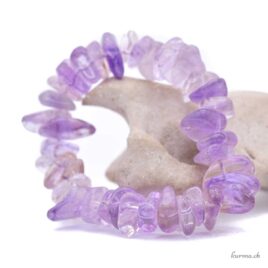
Naturalametrine is a rare form of silicon dioxide found primarily in a mine in Bolivia.
Its name is a combination of the words “citrine” and amethyst, and the two types of quartz that make it up.

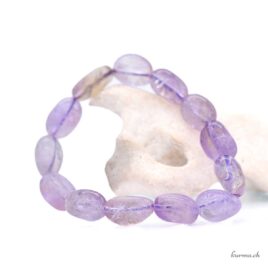
Ametrine
The Stone of Two Lights
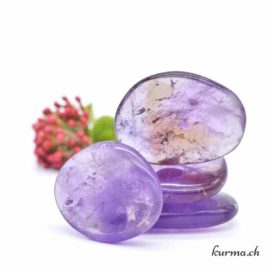
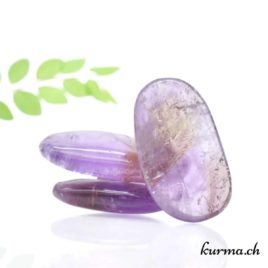
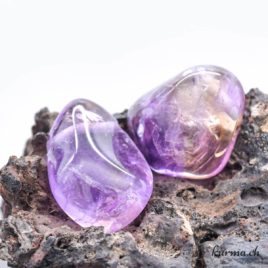
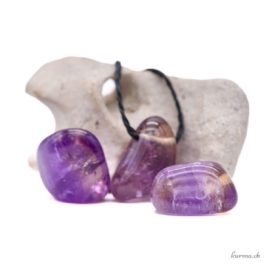
Violet and honey—two colors in harmony
A temperature variation splits the quartz
Formed in hydrothermal veins
In the past, a legend associated it with the harmony of opposites
Today, it evokes reconciliation and balance
A single mine in Bolivia produces most of the ametrines
A harmony of fire, contrast, and light
Ametrine
The Stone of Two Lights
Violet and honey—two colors in harmony
A temperature variation splits the quartz
Formed in hydrothermal veins
In the past, a legend associated it with the harmony of opposites
Today, it evokes reconciliation and balance
A single mine in Bolivia produces most of the ametrines
A harmony of fire, contrast, and light
Ametrine
The Stone of Two Lights
Violet and honey—two colors in harmony
A temperature variation splits the quartz
Formed in hydrothermal veins
In the past, a legend associated it with the harmony of opposites
Today, it evokes reconciliation and balance
A single mine in Bolivia produces most of the ametrines
A harmony of fire, contrast, and light
Ametrine
The Stone of Two Lights
Violet and honey—two colors in harmony
A temperature variation splits the quartz
Formed in hydrothermal veins
In the past, a legend associated it with the harmony of opposites
Today, it evokes reconciliation and balance
A single mine in Bolivia produces most of the ametrines
A harmony of fire, contrast, and light
What are the properties and of ametrine in crystal healing?
A tragic myth that gave rise to its symbols
Unknown to the ancient civilizations of Europe, Asia, or Africa, ametrine has a very limited geographical origin: the vast majority of its natural production comes from a single mine in Bolivia. Spanish conquistadors discovered it in the 17th century and brought and back to Europe, but it has only become widely available since the 1970s.
There is a popular myth associated with it: the legend of Princess Anahí, a member of the Ayoreo ethnic group—which has been virtually wiped out by conquest and theft of its lands.
Anahí falls in love with a Spanish conquistador. Torn between her people and love, she gives her lover a two-toned stone—purple and —before she dies, symbolizing her love divided between two worlds.
The legend of Anahí thus shapes the stone’s symbolism. Naturally blending two colors—Amethyst (purple) and (yellow)—its geological uniqueness becomes a metaphor for the union of opposites: and spirit and matter, intuition and , gentleness and , or loyalty to the past and for the future, Ametrine becomes a stone of reconciliation.
Anahí's love transcends their separation. Ametrine symbolizes fidelity, the strength of bonds that transcend distance and memory of and we love. That is why it is often given as a talisman to couples living between two cultures or separated by distance.
Month of birth
It is not a traditional birthstone, but combines two stones: amethyst, for the month of February, and , associated with the month of November.
Properties and
In crystal healing,Ametrine symbolizes harmonious duality—the reconciliation of opposites that paves the way for change, and foundations of maturity and new and . It can serve as a key to balancingthe intuition of Amethyst and the energy of Citrine.
For mystery and are not opposed to one another, but rather respond to one another, nourish one another, and complement one another. While reason illuminates, mystery animates: thought structures, and transforms. It is in this way that an inner alchemy and metamorphosis and creation can come to life.
By acting upon the world, we act upon the mind. There are two moments in this alchemical dynamic, which is a cycle, a spiral, a perpetual motion: the goal is to dissolve identities, certainties, and rigidities in order to allow the ego, fears, and habits to dissolve, thereby opening up an inner space (solve), and reconstructing a more fitting form, embodying a higher vision and a new way of being (coagula).
That is why mystery transforms us more deeply than explanation. An explanation is there to reassure us and meaning. A mystery shifts us, opening up an inner space where something can unravel, reassemble, and reinvent itself. It is the power of myths—such as that of Anahí— and fiction to speak with a force that rationality cannot match. They speak to the part of us that is not content merely to understand, but that has an urgent need to change.
Through its symbols of harmony, Ametrine promotes the mental clarity essential for decision-making, helping to balance emotions and fostering creativity, optimism, and .
Among its spiritual benefits in crystal healing, it is worth noting that, by supporting intuition and all and manifestation, it can be an ideal companion for any meditation practice.
Day by day
It can be a comforting stone that helps you find the right balance between the material and spiritual, work and personal and , family and for yourself.
At family or work gatherings, Ametrine fosters a cheerful atmosphere, encouraging a sense of humor and tolerance, and helping us accept that opposites can come together despite their differences and positive results.
Carrying a stone in your pocket or wearing Ametrine jewelry can be a great help in putting things into perspective and stopping you from seeing problems or difficulties where, objectively speaking, there aren’t any. The stone invites you to take a fresh look at the obstacles that litter your path. Are they simply the product of your imagination, of your limiting beliefs, a reflection of your fears and ? What if they were there to push you out of your comfort zone?
On a physical level
There is no scientific evidence for the physical effects of ametrine, but they are rooted in ancient traditions. According to this view, it may help lower adrenaline levels and be of great assistance in cases of emotional shock or particularly intense emotions.
It stimulates the mind while clearing it of distracting thoughts, making it an excellent stone for intellectual work and helpful aid for those with dyslexia and DYS disorders.
Ametrine is said to relieve digestive issues and pain associated with irritable bowel syndrome, indigestion, or renal colic. It is also believed to have detoxifying properties and recommended during intensive medical treatment or when undergoing withdrawal from alcohol, drugs, or tobacco.
How to use Ametrine
This stone may be particularly beneficial for children who lack self-confidence and are struggling in school. A bracelet, a pendant, or a stone in their pocket can be a great source of support for them.
If you have stomach pain, you can lie down with an ametrine stone placed on your stomach after a meal.
If you want to feel more comfortable in social situations, wearing an ametrine pendant at your solar plexus can help you feel confident and .
Where to place an Ametrine?
To enjoy its benefits all day long, keep it close to your body—in your pocket, your bra, or wear it as a piece of jewelry.
Having an ametrine in your home creates a cheerful atmosphere where everyone can feel at home (living room, dining room, kitchen).
Whether at work or in your studio, Ametrine stimulates your creativity and sharpens and mind.
Keep it in your wallet, because according to tradition, it helps bring financial abundance and in business.
Which stones or crystals go well with ametrine?
Ametrine can be combined with many different stones depending on the properties sought in crystal healing. Here is a selection of some of the most iconic ones:
- For mental clarity, inner vision, and , deep blue lapis lazuli can offer its benefits and wisdom and
- Combining it with citrine crystals—a stone associated and joy and energy and the sun—can energize you and boost your optimism and
- Amethyst can help balance emotions by enhancing the soothing qualities already present in Ametrine
- Another type of quartz, carnelian —which comes in orange, yellow, brown, or apricot hues—will boost your motivation and creative energy.
The Hardness of Ametrine: Important Notes on Its Combination with Other Minerals
Ametrine has a hardness of 7 on the Mohs scale. This means that among the stones we recommend pairing with it, Ametrine can scratch Lapis Lazuli (5–5.5 on the Mohs scale) or Carnelian (6.6–7); it can scratch each other, or Citrine (7) and (7). Handle your gemstones with care, avoiding unnecessary friction.
Refilling and cleaning
How do you cleanse an ametrine?
Gentle sunlight or full moonlight / clear water without prolonged immersion, or a soft, slightly damp cloth followed by immediate drying / form waves (Flower of Life or sacred geometries) / smudging (white sage or incense) / resting on a cluster of quartz or amethyst / singing bowl, Tibetan bells, or tuning forkTreatments to avoid
Avoid intense light and , as well as sudden temperature changes
Chakras
Third eye (Ajna) chakraassociated with amethyst, intuition, and inner and
Solar plexus chakra
associated with citrine, confidence, and personal and
Ametrine serves as a symbolic energetic bridge between these two centers
Astrological signs
Balanceharmony, balance
Gemini
duality, communication
Fish
intuitive and dimension
Element
Lightvitality, energy, determination, creativity
Air
mental clarity, communication
Mineralogy of Natural Ametrine
Ametrine belongs to the quartz group (tectosilicate) and has the chemical formula SiO₂. Its crystal system is trigonal (hexagonal).
Traces of iron and oxidation states are responsible for its colors; the yellow areas result from heat-induced oxidation, while the purple areas remain unoxidized. This is all due to a temperature gradient that occurred during the quartz’s formation.
Ametrine owes its geological origin to its formation in hydrothermal veins or pegmatites, where local temperature variations allow distinct colored zones to form.
It is found almost exclusively in a single mine (the Anahí Mine) in Bolivia— and a lesser extent and Brazil and India.
Its hardness on the Mohs scale is 7—it is a durable stone.
Its density is approximately 2.65.
Lithotherapy
- Planet(s) :
- Mercure
- Zodiac(s) :
- Gemini, Leo, Pisces, Sagittarius
- Purification :
- Singing bowl, Water, Fire, Fumigation, Moon, Form waves, Sun, Breath
- Physics :
- Digestive system, Detox, Stomach
- Emotional :
- Emotional Injury, Self-confidence, Self-esteem, Joy of living, Fear, Self-respect, Tolerance, Trauma, Balance
- Spiritual :
- Harmony, Spirituality, Transformation
- Disorder(s):
- DYS disorder
- Miscellaneous :
- Abundance, Chance, Creativity, Prosperity, Relationship (friendly), Relationship (family), Sense of humor
Mineralogy
- Hardness :
- 7
- Moths scale:
- 7
- Strunz classification :
- Silicate
- Crystalline system :
- Hexagonal
- Chemical element :
- Si, O
- Line color :
- White
- Density :
- 2.63-2.65
- Cleavage :
- Imperfect (parallel to rhombohedral surface)
- Fracture:
- Conchoidal, very brittle
- Transparency :
- Transparent to translucent
- Refringence :
- nω = 1.543-1.553, nε = 1.552-1.554
- Birefringence :
- +0.009
- Pleochroism :
- Dichroic
- Absorption spectrum :
- Cannot be evaluated
- Fluorescence :
- No
- Colors :
- Violet, yellow
- Magnetism :
- no
- Radioactivity :
- no
Continue your visit
*Please note! Some minerals may be toxic and must not be licked or ingested (as such or in the form of powder, elixir or stone water) or be in prolonged contact with the skin or mucous membranes.
*The information on the stones described here are general indications based on our research and experience, and are not exhaustive.
Reproduction in whole or in part of this content is prohibited. More info