

L’Œil-de-faucon
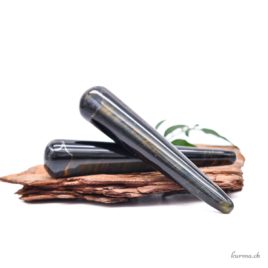
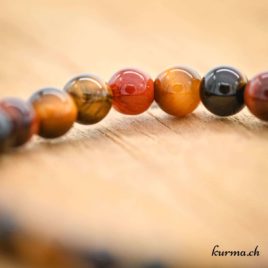
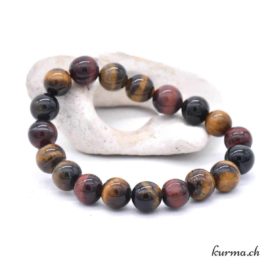
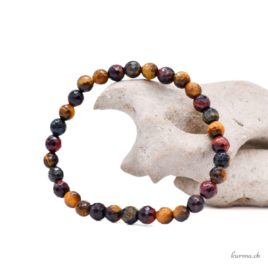
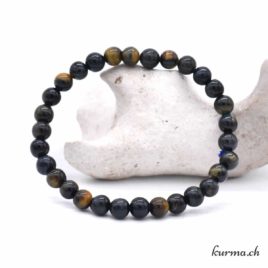
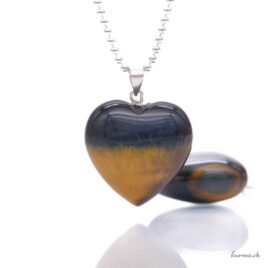
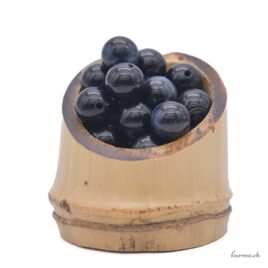
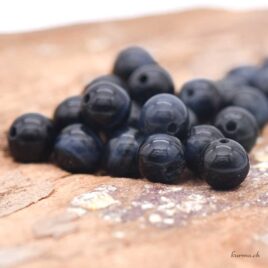
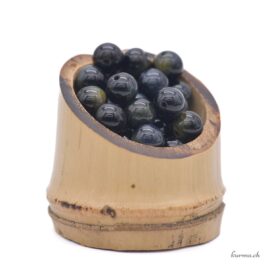
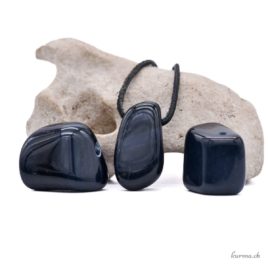
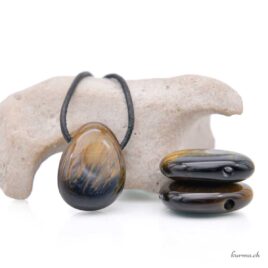
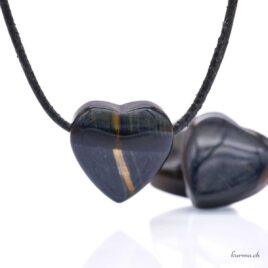
: semi-precious stones, massage sticks, bracelets, pendants (drilled stones or 925 silver, donut-shaped pendants), beads, tumbled and rough stones
Hawk's Eye is sometimes called Blue Tiger's Eye (commercial term), Blue Bull's Eye (rare, often incorrect), or Blue Fibrous Quartz.
In crystal healing, it is a stone of vision that supports introspection as well as perception, analysis, and strategy.
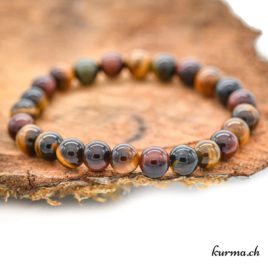

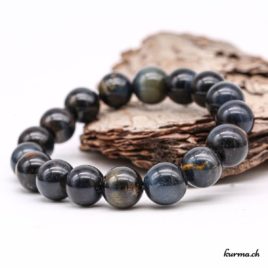
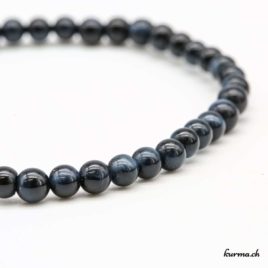

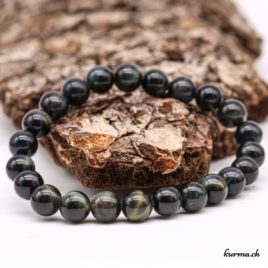


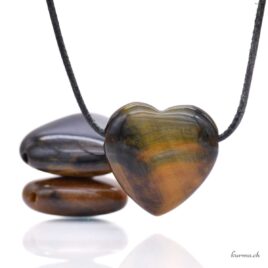
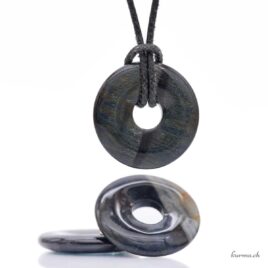
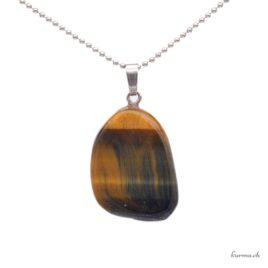
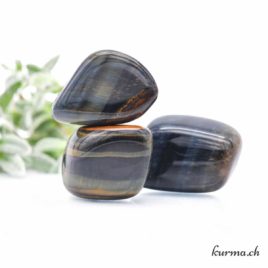
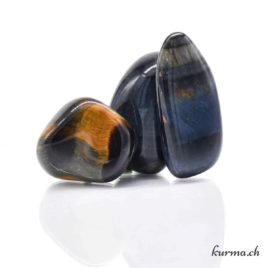
Hawk's Eye
midnight blue
The reflection glides like a fleeting shadow
A dark, satin-steel fluid
Bluish with oxides or the deep sky
In the blue of a storm where African falcons fly
The azure shimmers in the world and in thoughts
Polished pebbles with rippling reflections
Like a gaze from on high
Following the trail of paths
Hawk's Eye
midnight blue
The reflection glides like a fleeting shadow
A dark, satin-steel fluid
Bluish with oxides or the deep sky
In the blue of a storm where African falcons fly
The azure shimmers in the world and in thoughts
Polished pebbles with rippling reflections
Like a gaze from on high
Following the trail of paths
Hawk's Eye
midnight blue
The reflection glides like a fleeting shadow
A dark, satin-steel fluid
Bluish with oxides or the deep sky
In the blue of a storm where African falcons fly
The azure shimmers in the world and in thoughts
Polished pebbles with rippling reflections
Like a gaze from on high
Following the trail of paths
Hawk's Eye
midnight blue
The reflection glides like a fleeting shadow
A dark, satin-steel fluid
Bluish with oxides or the deep sky
In the blue of a storm where African falcons fly
The azure shimmers in the world and in thoughts
Polished pebbles with rippling reflections
Like a gaze from on high
Following the trail of paths
What are the benefits and properties of Hawk's Eye in crystal healing?
The Hawk's Eye is like a hawk:one who sees everything and knows how to achieve their goal by overcoming all obstacles.
Symbol origins
Hawk's Eye was officially "discovered" in 1883; the name “Hawk’s Eye” was given to it to distinguish it from other varieties of chatoyant quartz, such as Cat’s Eye or Tiger’s Eye—and it was (and still is) cut for jewelry in the famous regionof Idar, Germany.
Its use by ancient Egyptians and African peoples as a protective amulet is a modern mythological construct—ancient Egyptians used blue fibrous quartz in certain amulets, but not the “Hawk’s Eye” as a specific stone.
However, there is evidence of modern mining traditions in Southern Africa that associate stone with vigilance and birds of prey.
Furthermore, in certain Kalahari traditions, or among some Zulu and Ndebele groups in southern Africa, it is regarded as the stone of the traveler, the tracker, the shepherd, or the hunter. The Hawk’s Eye is sometimes associated with hawks (Black Sparrowhawk, African Goshawk, Yellow-billed Kite), birds that are seen as sentinels and invisible protectors, acting as messengers between heaven and earth. “Hawk-vision stones” are used there to enhance perception, vigilance, and practical insight—such as for reading signs—or as protective talismans.
In the Arab world, and in the Maghreb in particular, the Hawk's Eye is used to ward off the evil eye.
Stone of the Month for June
The blue color of the Hawk’s Eye links it to communication, mental fluidity, inner vision, the throat chakra (Vishuddha), and the energy of Gemini, the archetype of speech. And thus to the month of June, to the flow of ideas and its trends: to expression, sociability, mental lightness, and the element of Air.
Benefits
In crystal healing, the Hawk’s Eye is the stone of clear vision guided by intuition. There is an analogical equivalence between its support for mental clarity—which fosters an expanded clairvoyance of the world through vision and symbolism—and, at the same time, a call to an inner sensitivity that accompanies the gaze inward, attentive to instinct and intuition, and to the subtle perception of patterns previously unconscious.
Its symbol bridges these two worlds; just as clarity or symbolic insight relies on its calming effect to reduce anxiety by putting things into words, so too does emotional harmony go hand in hand with the ability to step back and shift one’s perspective in order to see beyond illusions and pretense.
It is a protective stone. By paying attention to their own perceptions, organizing their thoughts to view situations holistically when making decisions, the wearer of the stone finds support in overcoming obstacles through the metaphor and energy associated with the protection of the Hawk’s Eye, embodied by the image of a “protective field” against negative influences.
Day by day
His wisdom teaches you to take a broad view of what lies within you and what surrounds you; to position yourself and act in accordance with these observations, with fairness and wisdom, in full knowledge of the facts, without losing sight of your original goal.
A global perspective isn’t just about stepping back and looking at the world from a high vantage point. It’s also about looking within yourself without letting yourself be swayed by reassuring words, ego-flattery, or destructive judgments.
Her guidance can help you become aware of the patterns that lead to self-sabotage, manipulation, self-judgment, lack of confidence, naivety, or closed-mindedness. She encourages you to maintain or rediscover your independence of mind in all circumstances and to remain open to new ideas.
This gemstone is a welcome aid when making decisions or when difficulties cause confusion. Or when it comes to clarifying a goal and establishing a plan of action to achieve it.
On a physical level
There is no scientific evidence supporting the physical effects of the Hawk’s Eye; these are based on tradition: the stone may help alleviate vision-related issues (such as conjunctivitis, eye strain, and progressive myopia) or be beneficial for mood swings, tremors, or conditions related to nervousness or burnout.
How to use the Hawk's Eye?
Rituals
- When your eyes are tired, lie down with a hawk's-eye stone on each eye
- If you’re facing problems with no obvious solutions, or to help you make the right decision, try a visualization exercise, meditation, or relaxation technique with a Hawk’s Eye placed on your third eye (while making a specific request)
- Carry a Hawk's Eye as a talisman if you feel psychic attacks or are dealing with manipulative people
- During business or family meetings related to the implementation of a project, or if you need to hire staff or make important decisions regarding your personal or professional life, keep a close eye on yourself
- If, after developing a strategy, you find it difficult to take action, combine the Hawk’s Eye with the Tiger’s Eye (see below for combinations with other gemstones).
Where should I put it?
- Having a Hawk's Eye in your living space can help you become more aware. Don't be surprised if you start noticing a lot of synchronicities along the way.
- You can place this stone in your bedroom or under your pillow to help convey and understand the message in your dreams
- It is ideal for a therapy office or a space dedicated to meditation
- or at your desk, if you want to sharpen your observational skills and work on your projects with a big-picture perspective.
Who's the Hawkeye for?
- This is the perfect stone for those who don’t want to be easily swayed, for those who rarely have an opinion of their own, and for those who struggle to make decisions or choices
- It is well suited for entrepreneurs and those who are involved in developing strategies
- ideal for people who have a hard time accepting change or new things
- It can help relieve stress and burnout in people who feel like they're about to explode, helping them ease the pressure.
Which stones should be paired with the Hawk's Eye in crystal healing?
In crystal healing, the Hawk's Eye can enhance its benefits when combined with different stones and crystals, depending on the desired properties:
- Clear quartz is an amplifier for all gemstones
- You can combine Hawk's Eye withTiger's Eye, the stone's oxidized form, to enhance protection and grounding
- Lapis lazuli, another stone of vision that amplifies and nourishes your inner perceptions, acting as a form of intuitive communication
- Sodalite, the stone of thinkers, promotes mental clarity and rational thinking.
Note: The hardness of Hawk's Eye and its combination with other gemstones
Hawk's Eye has a hardness of 6.5–7 on the Mohs scale (it is a hard to very hard mineral). Among the stones we recommend pairing with it, it can scratch Lapis Lazuli (5–5.5) and Sodalite (5.5–6), and it can scratch or be scratched by Rock Crystal (7) and Tiger’s Eye (6.5–7). Handle your gemstones with care!
Reload and clean
How do you cleanse a Hawk's Eye?
Gentle sunlight / clear water (avoid prolonged immersion due to its fibrous structure, a characteristic inherited from crocidolite) / form waves (Flower of Life or sacred geometries) / smudging (sage, palo santo, or incense) / placed on a cluster or geode of quartz or amethyst / singing bowl, Tibetan bells, or tuning forkTreatments to avoid
Prolonged exposure to sunlight may cause the blue hues to fade / acids / salt—due to its fibrous nature / thermal shock
Chakras
Vishuddha (Throat Chakra)communication, sincere expression
Ajna (Third Eye Chakra)
intuition, inner vision
Astrological signs
Sagittariusbroader perspective, search for meaning
Aquarius
clarity, innovation
Capricorn
strategy, good outlook
Elements
Airmental clarity, communication
Ether
intuition, subtle perception
Mineralogy of Hawk's Eye
Hawk's Eye is a variety of macrocrystalline quartz belonging to the oxide mineral class—its chemical formula is SiO₂ (quartz).
This silicon dioxide contains (in trace amounts) sodium, aluminum, iron, and magnesium.
Its crystal system is trigonal, and its structure is a pseudomorphic fibrous aggregate.
Its color ranges from blue-gray to blue-green to dark blue, almost black, with a satiny to lustrous sheen and bright, iridescent highlights (Fe²⁺ ions) caused by parallel fibers inherited from crocidolite.
The rock forms when the fibers of crocidolite undergo silicification due to the penetration of silica-rich hydrothermal solutions. Quartz replaces the amphibole fibers while retaining their structure.
Differences between the Hawkeye and the Tiger Eye
Hawk’s Eye is the initial bluish form of fibrous quartz pseudomorphosed from crocidolite. As the iron oxidizes, the stone changes from blue to golden brown. Hawk’s Eye is thus the early phase, while Tiger’s Eye is the oxidized phase. It is common to find Hawk’s Eye and Tiger’s Eye intermingled.
The stone is found in large quartz veins and never in the form of crystals. The main deposits are located in South Africa—which is the largest producer—India, Brazil, and Australia.
The hardness of hawk's eye is 6.5–7 on the Mohs scale.
Lithotherapy
Mineralogy
- Hardness :
- 7.0
- Moths scale:
- 7
- Crystalline system :
- Trigonal
- Line color :
- Lead gray
- Density :
- 2.64-2.71
- Cleavage :
- No
- Fracture:
- Fibrous
- Transparency :
- Opaque
- Colors :
- Blue-black to blue-green with iridescent surfaces
Looking for visions?
*Please note! Some minerals may be toxic and must not be licked or ingested (as such or in the form of powder, elixir or stone water) or be in prolonged contact with the skin or mucous membranes.
*The information on the stones described here are general indications based on our research and experience, and are not exhaustive.
Reproduction in whole or in part of this content is prohibited. More info