

L'Oncolithe
rolled gemstones, pendants
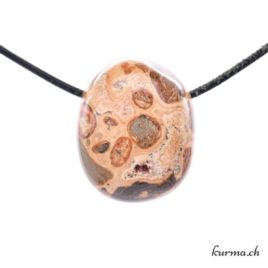
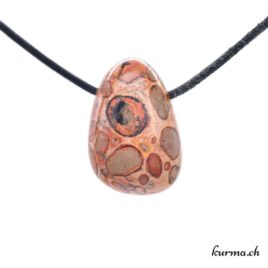
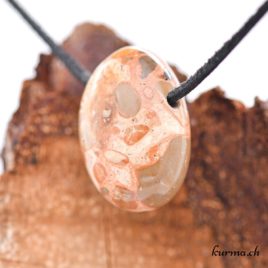
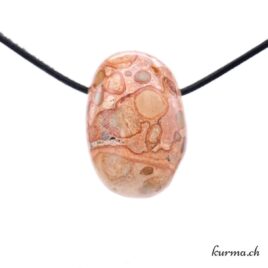
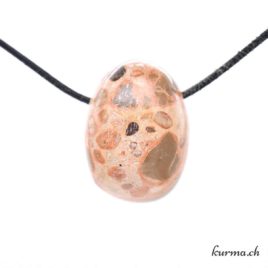
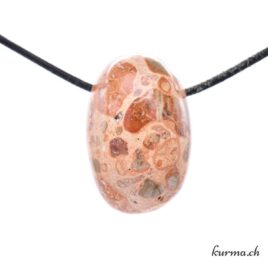
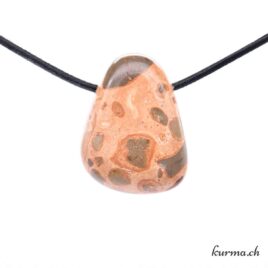
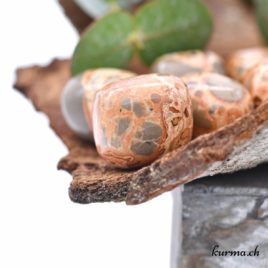
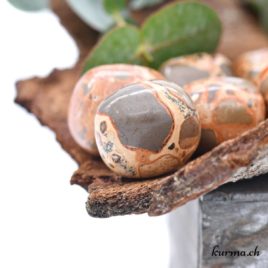
Oncolite, sometimes called Oncolite or - incorrectly - Leopardite or Quail's egg Jasper, is a carbonate sedimentary rock of ancient origin.
This beige to light-brown stone with rounded nodules is a symbol of growth, regeneration and prosperity in lithotherapy.


What are the properties and virtues of Oncolith in lithotherapy?
Symbols and meanings of stone
Oncolite is a limestone rock composed mainly of oncoids, rounded nodules formed by the action of cyanobacteria and calcium carbonate precipitation in shallow marine formations. The stone may be extremely ancient - over 800 million years old.
Its concentric formation, evoking the cycles of life, links it to symbols of growth, regeneration and prosperity, as well as to a reflection on luck, stability, balance and patience, all of which combine and question the value of overcoming and winning.
Benefits... and dangers of luck and prosperity
Welcoming good fortune might seem obvious at first - why shouldn't fortune be a blessing?
In lithotherapy, Oncolite's properties can help you grow and regenerate spiritually, welcoming good fortune and prosperity.
But, because our condition is made up of contradictions, from the depths of the ages an ancient wisdom warns us:
Be careful what you wish for, because you might get it.
Prosperity isn't just about winning. We also need to know how to put a victory to good use, through self-knowledge and openness to the sensibilities of others, otherwise we'll be shipwrecked and lost.
Ancient Greek historians were the first to understand this danger. Herodotus, the first historian of the West, wrote his History to warn Athenians of the dangers of arrogance and excess, which could lead to their downfall - for desiring more than is permitted arouses the fury of the gods.
Thucydides, on the other hand, warns of the dangers of triumphs, which can blind us and serious defeats.
The Oncolith, with its connection to the natural cycles of life, is a reminder of this wisdom, of the usefulness of looking after your emotional stability through inner balance and harmonization of energies.
With patience and perseverance, she accompanies the acceptance of change, which mirrors the process of personal transformation.
Her energetic and symbolic approach soothes all stress-related emotions in this state of mind.
It motivates against discouragement, encouraging re-connection to one's center and to the earth to improve anxiety management, mental security and self-confidence.
Oncolith's physical properties
Its value is symbolic and not medical. Tradition attributes to it a gentle action in case of digestive disorders. Apply directly to the affected area.
How to use Oncolithe
- You can place the stone next to your bed and hold it in your hand when you wake up.
- wear this stone to benefit from its virtues on a daily basis.
What stones should Oncolith be associated with?
To amplify its effects in lithotherapy and depending on the wearer's use, Oncolith can be combined with other lithotherapy minerals:
- To stimulate your grounding, courage and motivation, combine it with Pyrope Garnet or Almandine Garnet.
- to nourish your vitality, the power of Jasper, a speckled stone, supports the paths of transformation
- for earth-sky connection, emotional harmony and meditation, combines Oncolite with Scolecite .
Reload and clean
How to purify an Oncolith?
Full Moon / clear or spring water / shape waves (life flowers or sacred geometries) / fumigation (white sage or incense, 30 to 60 seconds) / rest on a Quartz or Amethyst geode / singing bowl, Tibetan bells or tuning forkTreatments to avoid
Avoid acids and chemicals
Chakras
Solar plexus chakra (manipura) / heart chakra (anahata)digestion, regulation and harmony of emotions
Astrological signs
Cancer, Piscesnatural cycles
Element
Waterfluid energy
Oncolite mineralogy
Its name literally means "nodule stone", from the Greek onkos - tumor/nodule and lithos - stone.
Swiss geologist Arnold Heim studied oncolite in the early 20th century. He was the first to use the term "oncoids" (in 1916), which make up more than 50% of this carbonate sedimentary rock.
Oncoids are rounded nodules, mostly calcareous, formed by the accumulation of concentric layers of calcium carbonate around a fragment of shell, sand grain or mineral debris. Their layers are irregular and often, in shallow marine formations, linked to the activity of cyanobacteria or algae, but not exclusively.
They range in size from millimeters to centimeters, and are rounded in appearance most of the time, with a beige to light brown color.
Geological studies use oncoliths in paleoclimatology and sedimentology to reconstruct past marine environments.
It is found in France, Germany, Austria, the United States and Eastern Siberia.
Oncolite's hardness can vary according to the proportion of minerals present; in general, it ranges from 2.5 to 3 on the Mohs scale - it's a soft stone, sensitive to scratches and acids.
Did you know?
Oncolithe has two misleading nicknames:
Quail's egg Jasper , which is not a Jasper.
And Leopardite , not to be confused with Leopard Jasper, which is Rhyolite's nickname.
Discover the virtues of the jade egg, another symbol of prosperity.
Other stones of prosperity
*Please note! Some minerals may be toxic and must not be licked or ingested (as such or in the form of powder, elixir or stone water) or be in prolonged contact with the skin or mucous membranes.
*The information on the stones described here are general indications based on our research and experience, and are not exhaustive.
Reproduction in whole or in part of this content is prohibited. More info