

Onyx
black / marbled blue, orange, red, green
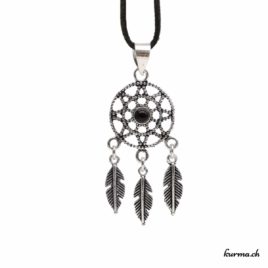
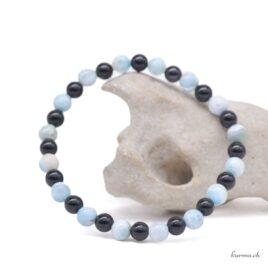
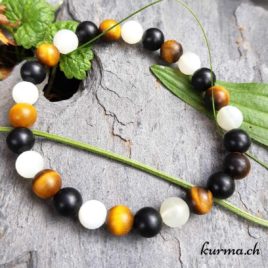
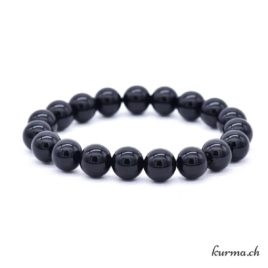
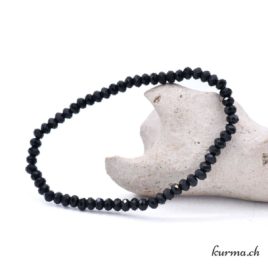
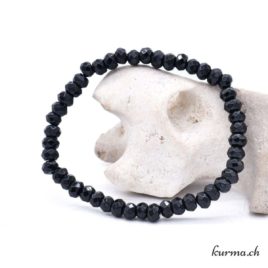
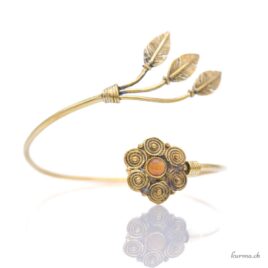
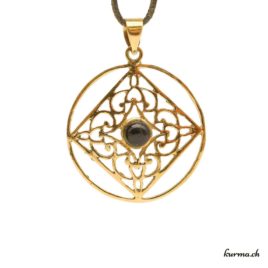
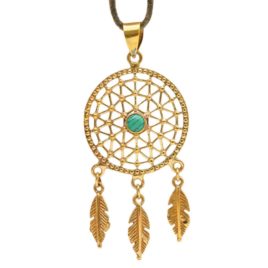
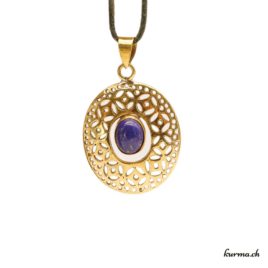
gemstones, dreamcatchers, bracelets, pendants, rolled stones
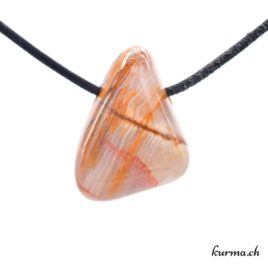
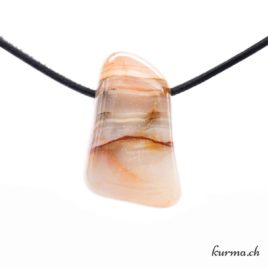
Onyx is a variety of Chalcedony, from the Quartz group. It is a black stone, sometimes with white veins, or marbled with blue, orange, red or green.
It is highly prized for its protective properties in lithotherapy.
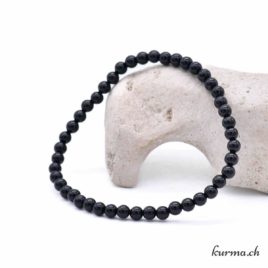
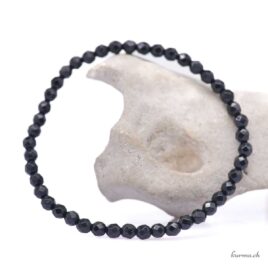
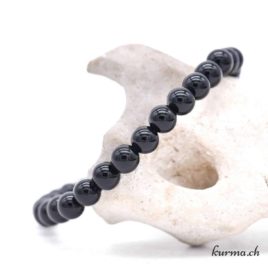
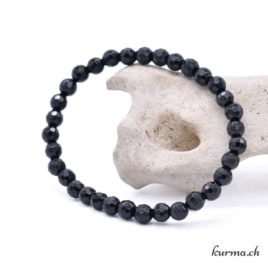
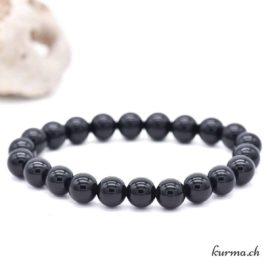
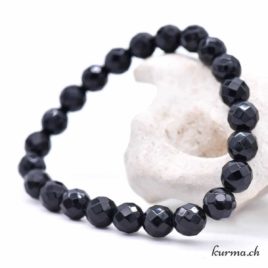
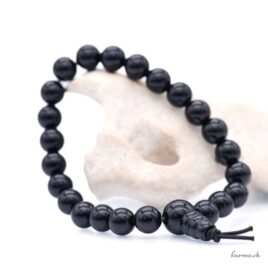
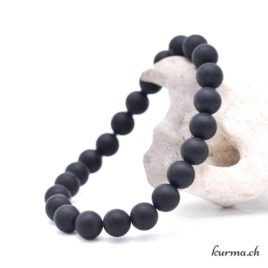
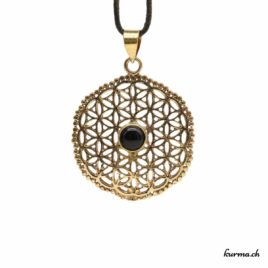
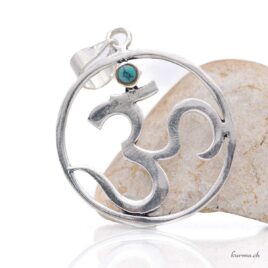
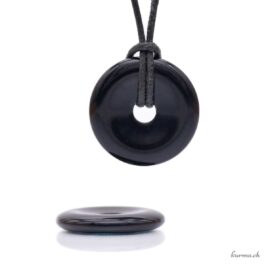
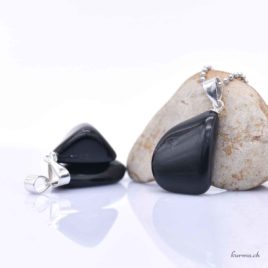
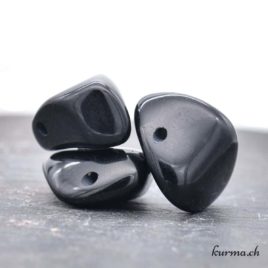
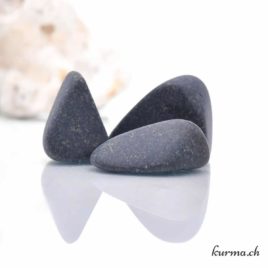
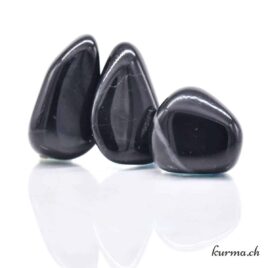
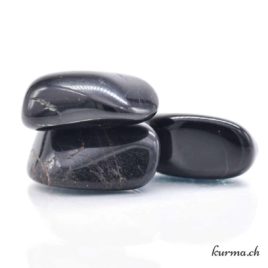

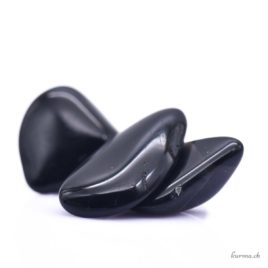
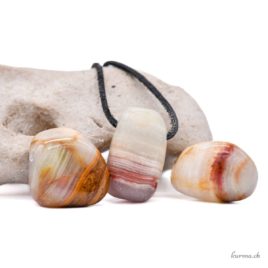
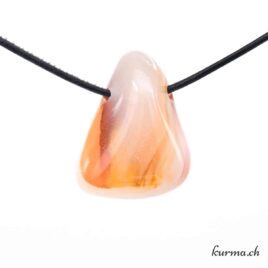
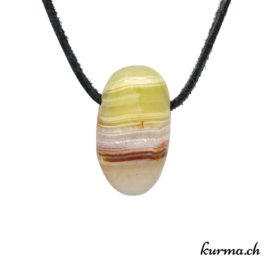
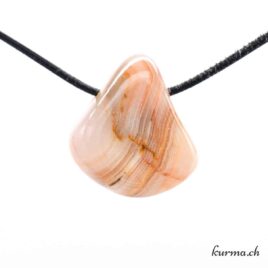
What are the properties and virtues of Onyx in lithotherapy?
Symbols of an ambivalent stone
Its name comes from the Greek onyx, meaning "nail".
There is a Greek legend, handed down over the centuries but without any archaeological or historical source, which explains the origin of Onyx and its name: Eros or Cupid cut the nails of Venus as she slept, and the gods or Moires, to preserve them, transformed these fragments into Onyx.
Although used since antiquity for its aesthetic and symbolic qualities, onyx has inspired feelings ranging from awe and strong attraction, depending on the culture.
It adorned the jewelry and amulets of the ancient Egyptians; in the form of a scarab, the stone provided protection during funeral rites.
Its traditions reflect its ambivalence: Black Onyx may have been associated with bad luck in certain Arab cultures, while in India it was perceived as a protective stone.
Onyx could easily be confused with other black stones, ancient writings are unreliable in tracing its history before the 18ᵉ century.
Medieval writings speak of a black stone (probably Onyx) used in magic to protect against demons.
This stone became very fashionable in jewelry in 19thᵉ century England, during the Victorian era. While the color black was highly appreciated as a symbol of elegance, it was also the color of mourning worn by Queen Victoria from the death of her husband until the end of her life. In solidarity with the Queen, it was considered fashionable to wear black clothes and jewelry.
Significance and spiritual benefits
Onyx is today sought after in lithotherapy for its anchoring and protective virtues.
Helping to preserve self-control, his guidance provides an anchor of strength and stability to better face the inevitable trials of life.
Its protection in lithotherapy manifests itself in the symbol acting as an energetic shield, both against negative external influences and to counteract destructive impulses at the root of self-deprecating thoughts or demoralizing feelings.
The symbolism of its black color invites you to introspection, the only possible way to find the cause(s) of your problems or difficulties. Black stones are essentially linked to the Earth element, in connection with the quest for anchorage and stability. Here you can see another black stone - Shungite - which can accompany you on a path of transformation.
Its use as a spiritual and energetic practice can thus support the emotions by promoting resilience in the face of past trauma and injury, providing confidence and assertiveness to guide your decision-making.
While maintaining and nurturing an empathy with desire, the wisdom of Onyx teaches you to act with righteousness and a sense of responsibility. To take on your tasks without running away from them or denying them, not to let your scattered mind or your emotionality deceive you. With its reminder of the art of self-control, Onyx is a stone that can help in many everyday situations.
On a physical level
Onyx's physical powers are not based on scientific claims, but on tradition: it is reputed to help relieve tinnitus and inner-ear disorders. In this way, it can improve hearing, sight and balance and boost the immune system.
How to use Onyx
- Onyx works slowly, over time. To take full advantage of its benefits, wear Onyx on your body every day.
- take the Onyx with you when you meet people who could easily manipulate you
- you can wear Onyx as a talisman to protect yourself from negative energies in your environment.
Where to place Onyx?
- Onyx in your living space diffuses energies conducive to the concrete realization of things and acceptance of the world of matter.
- place this stone on your desk to help you assert yourself in the professional world, to keep you on track, to keep you focused and to take on all the responsibilities related to your work or your family
- You can also place it at the entrance to your home to protect it.
Who is Onyx for?
- For people who are never on time or easily distracted
- for and who have difficulty asserting themselves, lack confidence or are easily influenced
- for people struggling to fully embody themselves and live in harmony with the physical world
- stone can help free you from addictions such as alcohol, tobacco, drugs, sugar, compulsive buying, etc. Or cleanse emotional dependencies.
Precautions for use
Chez certaines personnes, l’Onyx peut accentuer l’émotion de tristesse (ce qui n’est pas négatif si la pierre est utilisée dans une démarche introspective).
Certains lithothérapeutes déconseillent l’Onyx aux femmes enceintes.
What lithotherapy stones should Onyx be associated with?
To amplify its effects, Onyx can be combined with other minerals and crystals, depending on the wearer's purpose:
- Violet Quartz or Amethyst will provide welcome serenity while reinforcing the spiritual protection of Onyx.
- Smoky or brown quartz supports emotional anchoring and stability
- the combination of Onyx with Sapphire or Blue Corundum can be an asset for calm communication and a clear vision of oneself
- Sardonix or Sardoine brings the courage and mental clarity to set limits.
Refilling and cleaning
How to purify Onyx?
Full Moon / under clear or spring water / soft and damp cloth followed by quick drying / shape waves (flowers of life or sacred geometries) / fumigation (white sage or incense) / rest on a Quartz or Amethyst geode / singing bowl, Tibetan bells or tuning forkTreatments to avoid
Avoid acids, abrasive and chemical products, as well as prolonged exposure to sunlight or soaking.
Chakras
Root chakra (Muladhara)stability and inner balance
Astrological signs
Capricorn, Leostrength, stability
Element
Earthanchoring, safety
Onyx mineralogy
Onyx is a variety of chalcedony, itself a member of the quartz group.
Its colors are generally reddish-brown and black.
Its parallel bands, usually black and white, distinguish it from Agates, whose bands are concentric.
Its crystal system, with a vitreous to silky luster, is trigonal, with a typical rhombohedron shape, with three equal axes, but ≠ 90° - like Quartz.
Its deposits are located in Brazil, India, the United States, Madagascar, Mexico and Uruguay.
Its hardness ranges from 6.5 to 7 on the Mohs scale - a relatively resistant stone.
Did you know?
Naturally black Onyx is rare. Tinted or heated Chalcedony is often sold as Onyx.
Lithotherapy
- Element(s) :
- Zodiac(s) :
- Capricorn, Leo, Sagittarius
- Purification :
- Singing bowl, Water, Fumigation, Moon, Form waves, Sun, Breath, Earth
- Physics :
- Immune system, Ears, Hearing, Eyes
- Emotional :
- Action, Self-confidence, Self-image, Self-respect, Sadness, Balance
- Spiritual :
- Anchoring, Harmony, Embodiment, Protection, Sense of responsibility
- Miscellaneous :
- Protection, Sexuality
Mineralogy
- Hardness :
- 7.0
- Moths scale:
- 7
- Strunz classification :
- Silicate
- Crystalline system :
- Trigonal
- Chemical element :
- Si, O
- Line color :
- White
- Density :
- 2.66
- Cleavage :
- No
- Fracture:
- Conchoidal
- Transparency :
- Translucent
- Refringence :
- 1,543-1,552 à 1,545-1,554
- Birefringence :
- 0,009; positive biaxial
- Colors :
- Black with white veins
- Magnetism :
- no
- Radioactivity :
- no
Other protective stones
*Please note! Some minerals may be toxic and must not be licked or ingested (as such or in the form of powder, elixir or stone water) or be in prolonged contact with the skin or mucous membranes.
*The information on the stones described here are general indications based on our research and experience, and are not exhaustive.
Reproduction in whole or in part of this content is prohibited. More info