

Prasiolite - Prase quartz, green or hyaline
; pendants made of drilled stones or 925 silver; tumbled gemstones
Prasiolite is an understated quartz with a magical and cheerful vibe that, in crystal healing, invites you to experience vitality, calm, and self-love.
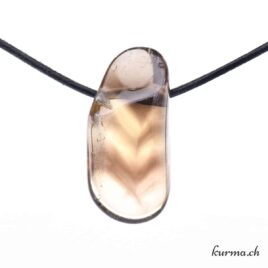
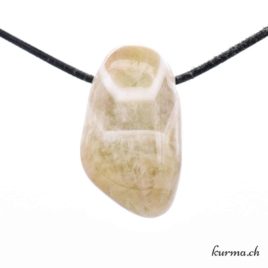
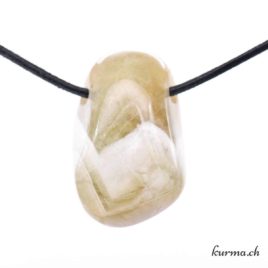
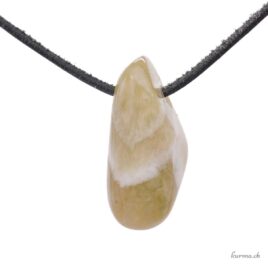
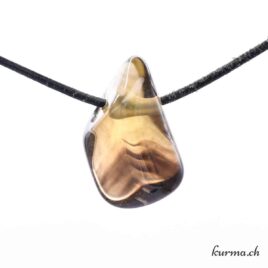
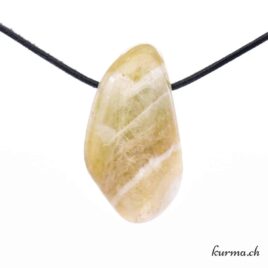
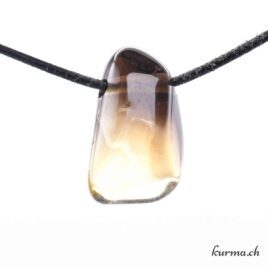
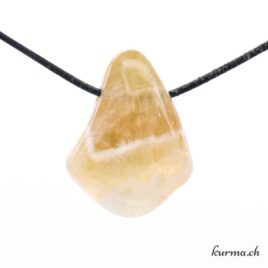
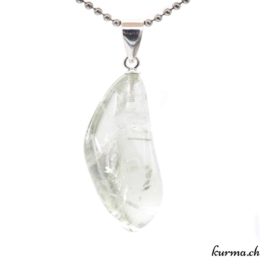
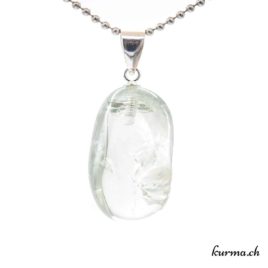
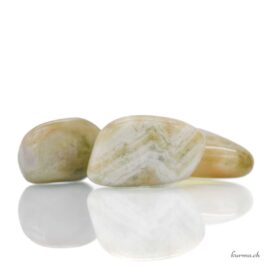
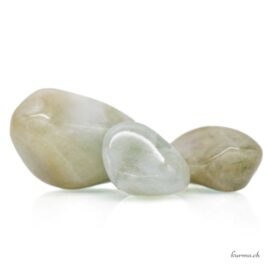
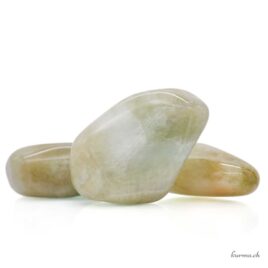
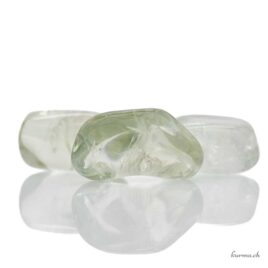
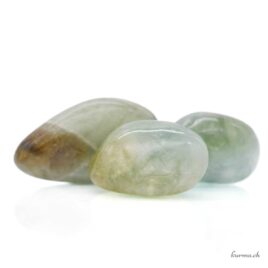
What are the meanings and properties of prasiolite in crystal healing?
A companion for personal growth in crystal healing, Prasiolite symbolizes healing energy for the emotions and supports clarity through balance.
Symbols of Prasiolite Quartz
Prasiolite gets its name from the Greek words prason (“leek”) and lithos (“stone”).
This “green amethyst” (a term that is, however, incorrect from a mineralogical standpoint, since amethyst is defined by its purple color) belongs, just like amethyst, to the large quartz family, which includes rose quartz, rock crystal (or clear quartz ), and smoky quartz, which ranges in color from brown to black.
Prasiolite's natural pale green color makes it a rare and highly sought-after gemstone in jewelry; it is often imitated using synthetic materials or by artificially heating certain iron-rich amethysts.
Prasiolite has no documented ancient tradition. Contemporary traditions articulate an intuitive sense that associates its symbolism of vital energy with both emotional calm and mental clarity, much like crystal healing, which views the union of these two aspects as an ideal balance for those seeking personal growth.
Stone of the Month
Because of its connection to amethyst, in Western traditions prasiolite is symbolically associated with the month of February.
Spiritual benefits
Its energy invites us to love and accept ourselves. To stop waiting for validation; to accept the love, recognition, or approval of others as a gift.
In crystal healing, green crystals are a source of emotional healing. Prasiolite can help restore self-confidence and the stability of a renewed inner balance. This sensitive stone works to soothe our feelings without numbing them, by fostering a new sense of self-awareness—one that is both clear and warm—which helps us grow as human beings.
Day by day
Prasiolite, with its perfect balance of seriousness and lightness, can be like a firefly on your path—a guide whose grace and vitality accompany you on your journey to discover your own authenticity.
This gemstone helps you avoid being thrown off balance or influenced by unpleasant energies that may be present in your surroundings.
Which gemstones go well with prasiolite?
In crystal healing, prasiolite can be combined with other stones and crystals. For example, depending on the desired benefits:
- Combining it with green aventurine and fuchsite-included green quartz will support the heart’s energy of balance and healing
- Combining it with peridot or chrysolite will bring vitality and energy to your journey of transformation
- Rhodonite or Manganolite to open oneself to forgiveness and free a blocked mind
- For deep emotional healing or to complement work on the heart chakra, using prasiolite, rhodochrosite, or dialogite can nurture love, harmony, and balance.
Notes on the Hardness of Prasiolite and Its Association with Other Minerals
Prasiolite has a hardness of 7 on the Mohs scale—it is a durable stone. Among the stones we recommend pairing it with, it can scratch Rhodonite (5.5 to 6.5) or Rhodochrosite (3.5 to 4). It can scratch or be scratched by Green Aventurine or Peridot (both 6.5 to 7).
Handle with care!
Reload and clean
How do you cleanse a prasiolite?
Clear water without prolonged soaking, or with a soft, damp cloth followed by immediate drying / form waves (Flowers of Life or sacred geometries) / smudging (sage or incense) / resting in soft light on a druse, cluster, or quartz geode / singing bowl, Tibetan bells, or tuning forkTreatments to avoid
Avoid prolonged exposure to the sun and excessive heat—which can cause discoloration—as well as abrasive and chemical products
Chakras
Heart (Anahata)love, harmony, balance
Astrological signs
Balancebalanced relationships
Fish
calmness, intuitive sensitivity
Virgin
clarity, emotional harmony
Elements
Airclarity and emotional lightness
Earth
green color stability
Mineralogy of Prasiolite
Prasiolite is a variety of quartz (SiO₂) belonging to the silicate class and the tectosilicate subclass.
Its density is 2.65, it has no cleavage, and it fractures conchoidally.
With very weak pleochroism (light green to pale green), its green color results from structural changes in the iron caused by heat treatment or controlled irradiation. Natural prasiolite is rare and can form through the natural heating of amethyst in volcanic or geothermal environments.
It is found in Poland, Namibia, Canada, Brazil, the United States, Germany (Nack), as well as in Bolivia, Uruguay, Mexico, Tanzania, Madagascar, Mozambique, Zimbabwe, Thailand, India, and China.
Its hardness is 7 on the Mohs scale.
Self-Love and Authenticity
*Please note! Some minerals may be toxic and must not be licked or ingested (as such or in the form of powder, elixir or stone water) or be in prolonged contact with the skin or mucous membranes.
*The information on the stones described here are general indications based on our research and experience, and are not exhaustive.
Reproduction in whole or in part of this content is prohibited. More info